
Travel Series Part III of VI: Death Valley National Park

From the Archives: A California Road Trip Adventure
I was digging through the archives and came across this favorite chapter from our California road trip—a season filled with change, adventure, and so many unforgettable views.
At the time, we were preparing for a cross-country move, surrounded by endless boxes and all the emotions that come with starting a new chapter. This road trip was something to look forward to—a chance to slow down, explore, and make memories along the way.
By day two, we had already stopped at Mono Lake and the Ancient Bristlecone Pines before continuing south toward Death Valley. After a long first night on the road, we were tired but eager to keep exploring.
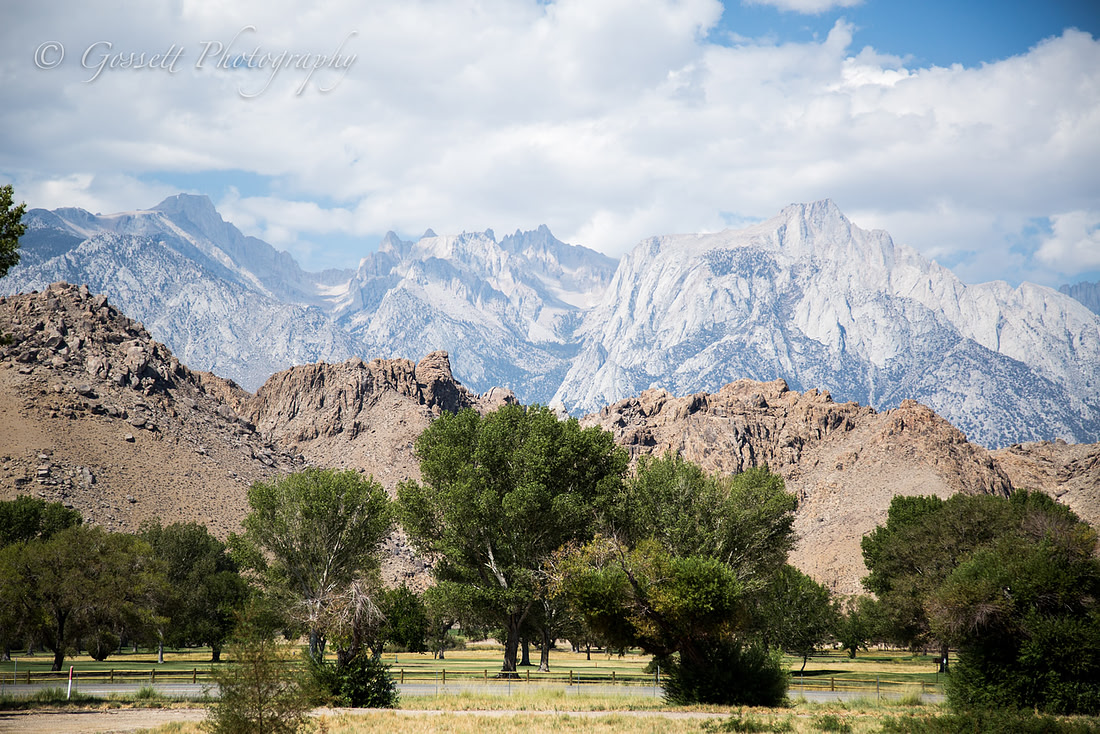
With the Sierra Nevada mountains towering beside us and the landscape stretching endlessly ahead, we stopped at the Eastern Sierra Interagency Visitor Center. Watching hikers arrive from and prepare for their mountain adventures made us wish we had a little more time to trade our itinerary for a backpack and a few extra days on the trail.

Into the Desert: Death Valley National Park
Before heading into Death Valley, we stopped at the visitor center and learned just how remote and extreme this landscape can be. With limited facilities, long stretches of road, and temperatures expected to climb near 112 degrees, we double-checked our tires, gas, and supplies before continuing.
With a cooler packed full of ice-cold water, lemonade, and tea, we began our journey into the desert. The miles stretched on, surrounded by incredible views that felt almost otherworldly.
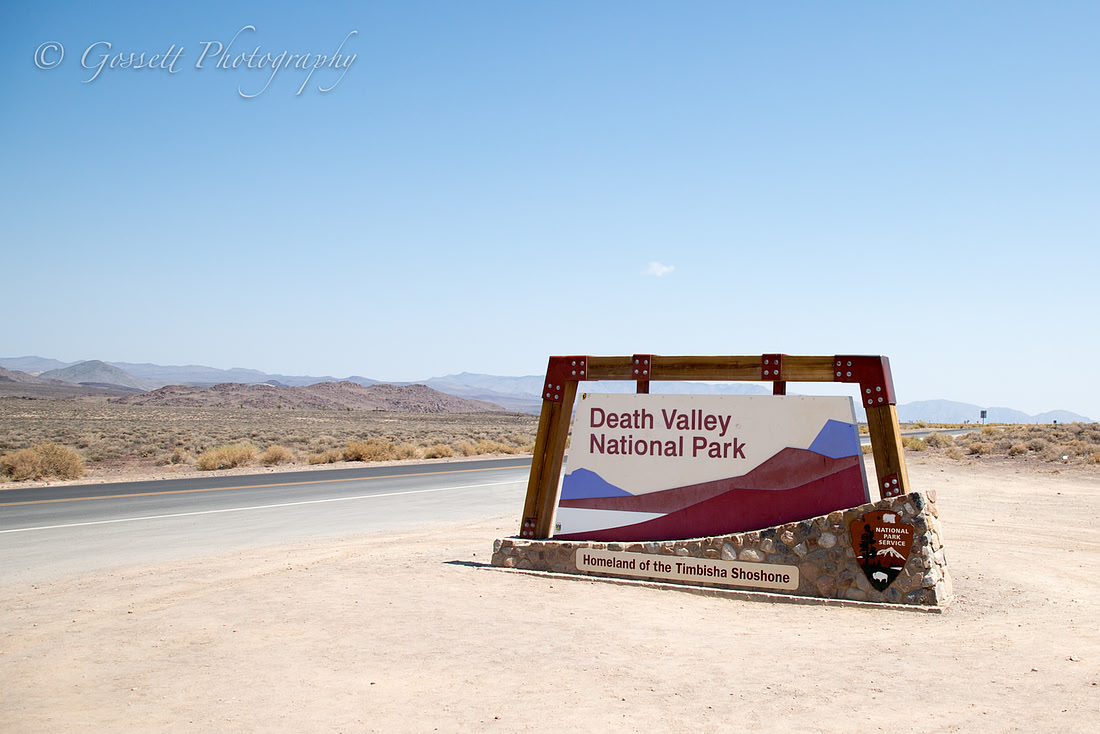
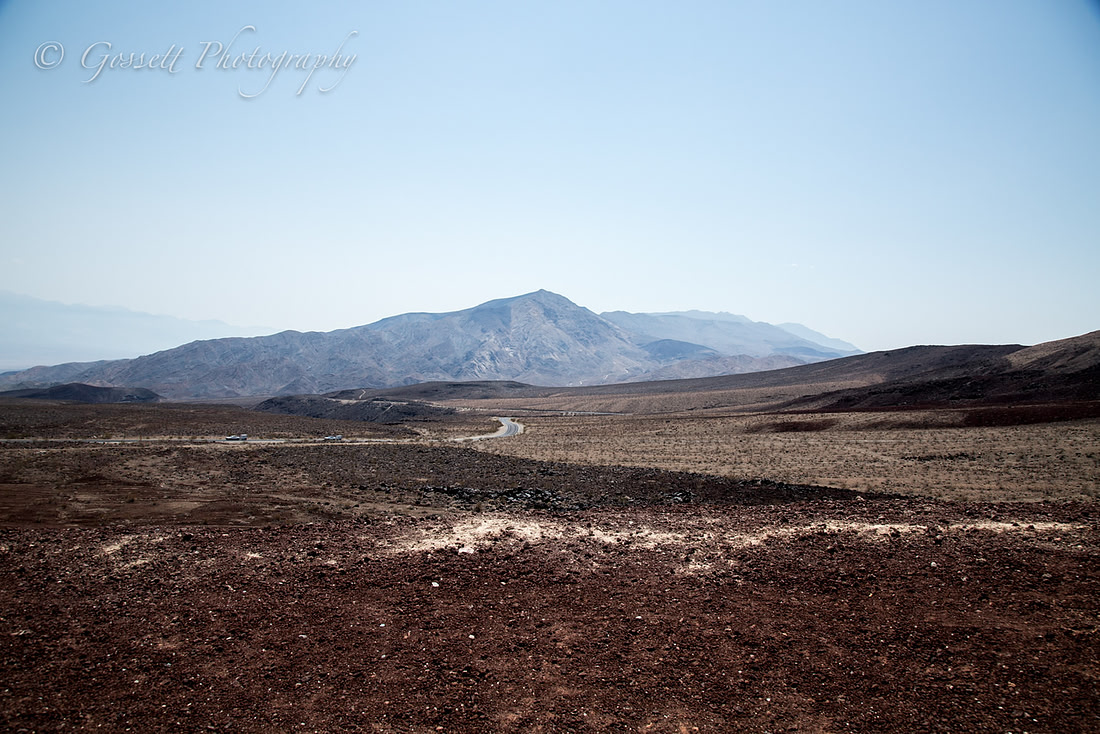
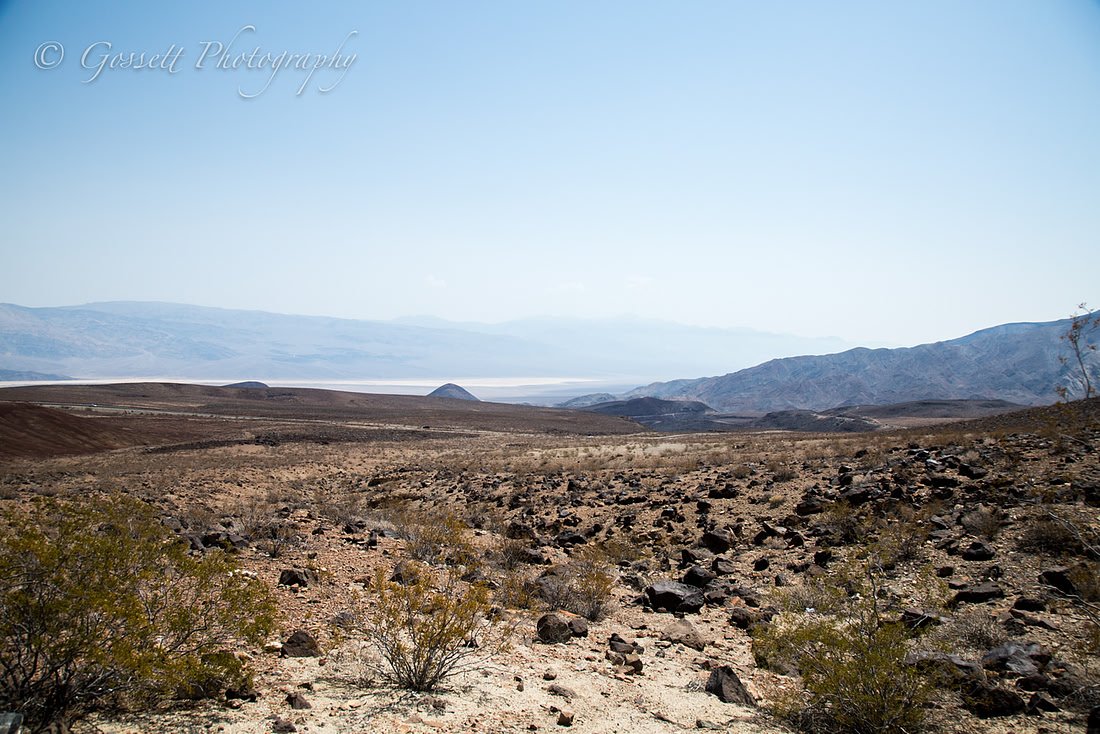
Forty miles and forty minutes later, we made our first stop for the obligatory National Park sign photo, followed by Father Crowley Vista. Standing there in the middle of such a vast landscape was a reminder of why we love exploring—because the journey itself often becomes the memory.
The Road Ahead
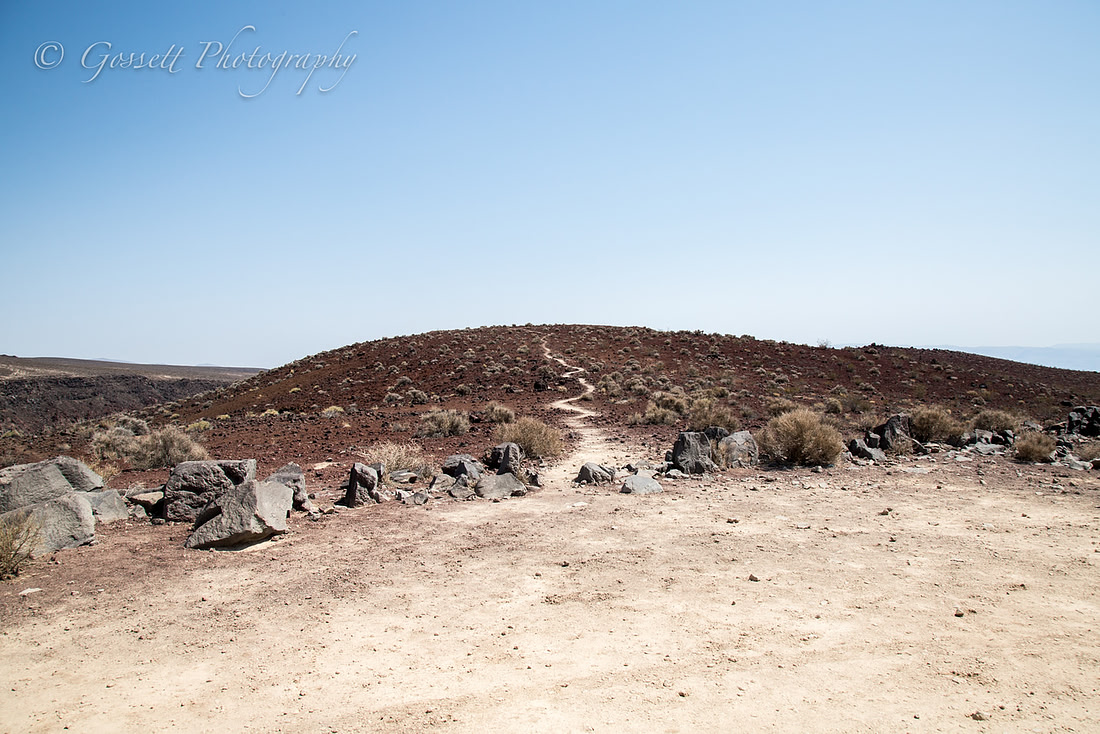
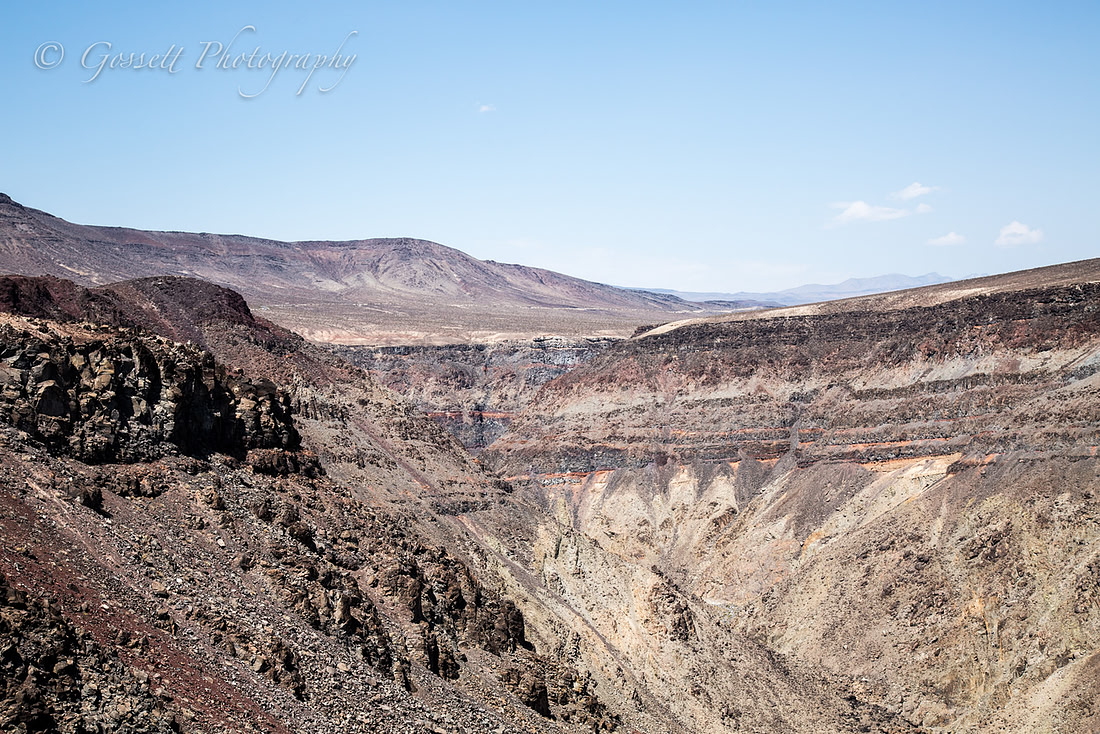
Stepping out of the air conditioning, we only made it as far as needed to take in Father Crowley Vista. Normally drawn to any trail we pass, the desert heat had us moving quickly—and carrying our pup because the ground was too hot for her little paws.
From the overlook, we watched tiny cars slowly wind their way through the mountain roads ahead and looked back at our trailer hitched to the Jeep. The question crossed our minds: Would we make it?
I loved playing The Oregon Trail as a kid, but this real-life 2016 version—with a trailer, a desert crossing, and triple-digit temperatures—felt like a much bigger adventure than the computer game ever prepared us for.
Choosing the Adventure
When we decided to move from Sacramento, California, to Atlanta, Georgia, we carefully thought through what we had learned from our previous long-distance moves. A POD seemed like the smartest choice—and honestly, it was worth every penny.
But there was one problem: what about the things we would need before the POD arrived? The heirlooms, the essentials, and all the items too important to leave behind?
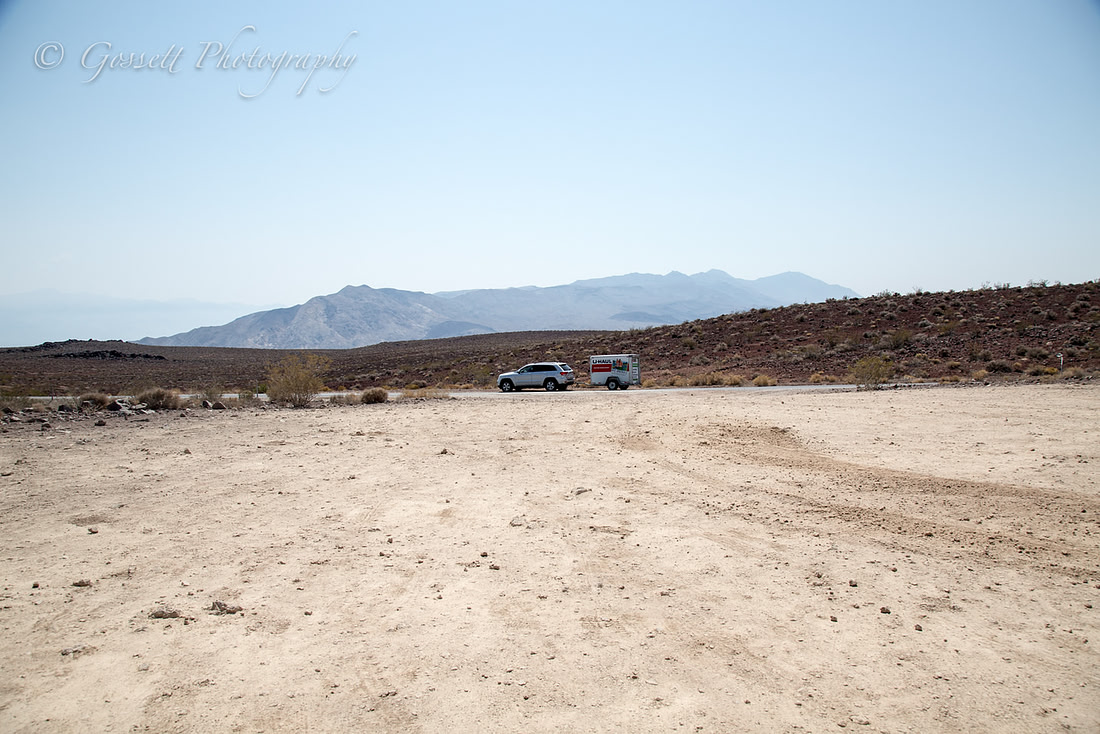
We knew hauling those things across the country would make the journey a little more complicated, but we’ve never been the kind of people to shy away from an adventure. So we loaded up, hit the road, and brought our U-Haul along for the ride.
And for the most part, we felt confident in our choice… until the combination of desert heat and steep mountain climbs tested us. We paused for a moment, looked at what was ahead, and decided: “Nah, we got this.”
Through the Heat of Death Valley
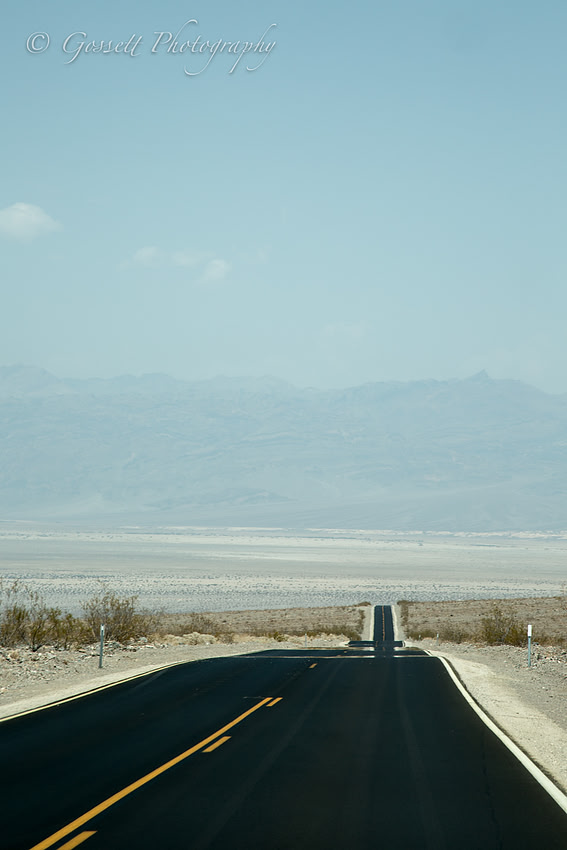
The drive toward the Mesquite Flat Sand Dunes should have taken less than an hour, but our little Jeep working hard to pull the U-Haul had other plans. We made plenty of stops along Highway 190 to let the engine cool as we climbed toward Towne Pass, reaching nearly 5,000 feet in elevation.
At the top, we paused to take in the view and prepare for the descent. The air was hot and still, the smell of burnt rubber lingered, and heat waves shimmered across the desert landscape ahead.
After carefully making our way down, we finally reached the flatter lands and let out a huge sigh of relief. Continuing toward the dunes, we were reminded once again of the desert’s intensity as the sand was too hot for our pup’s paws.
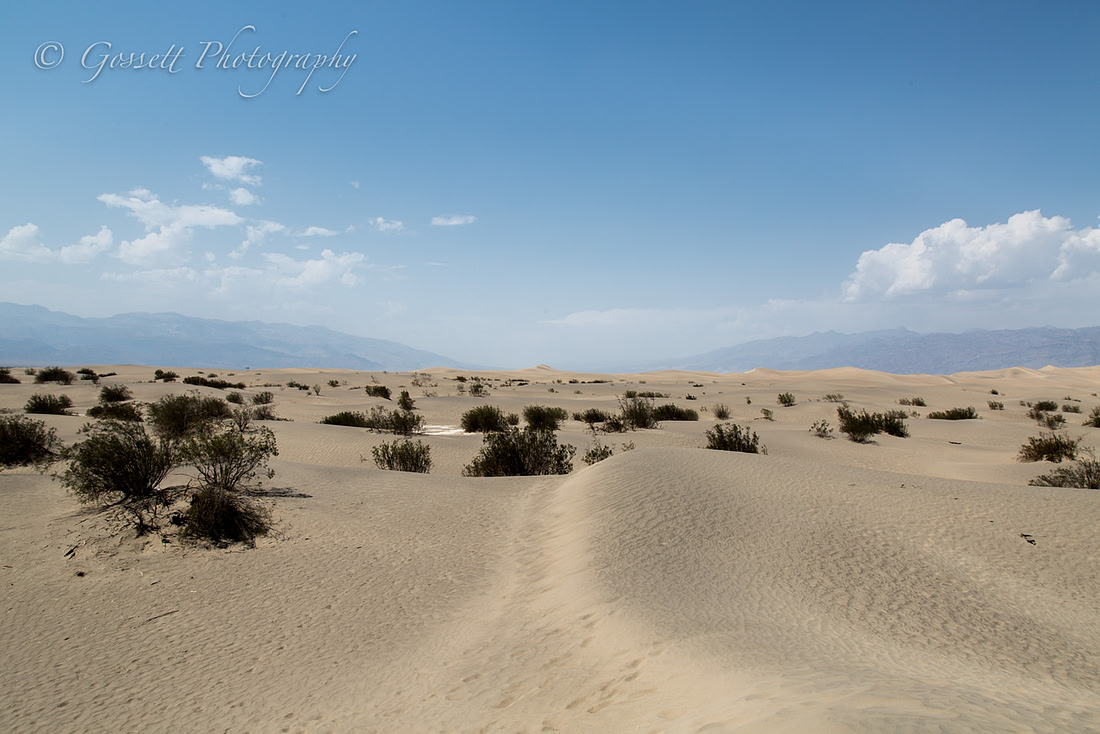
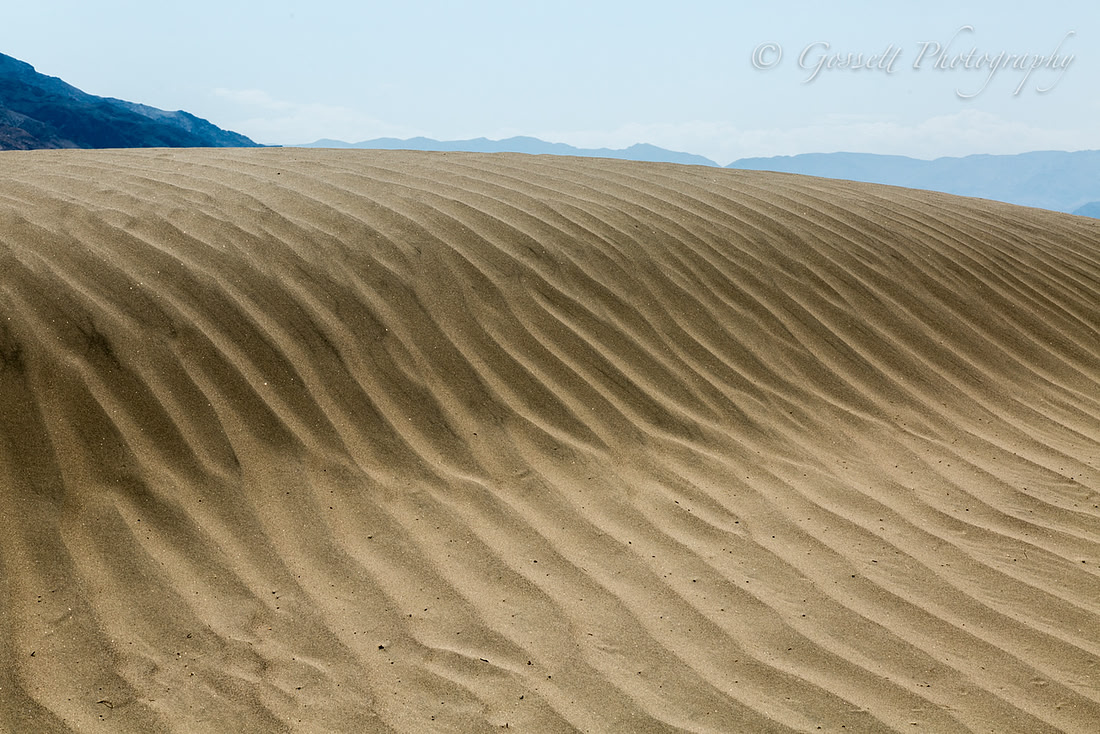
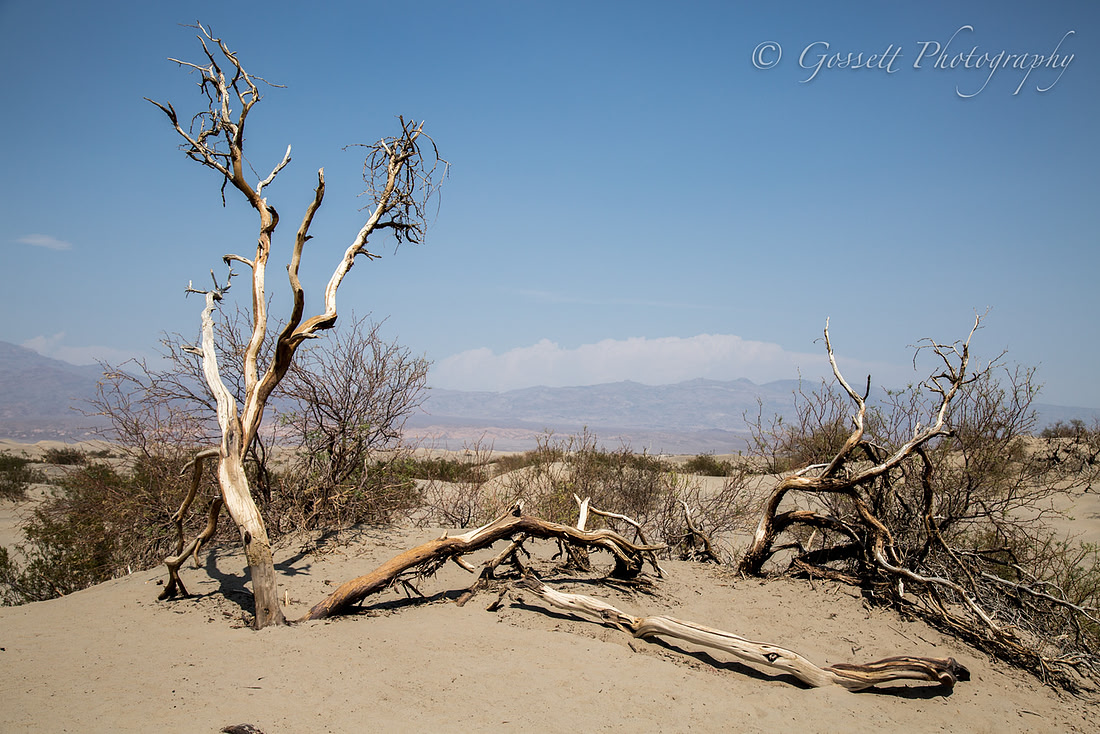
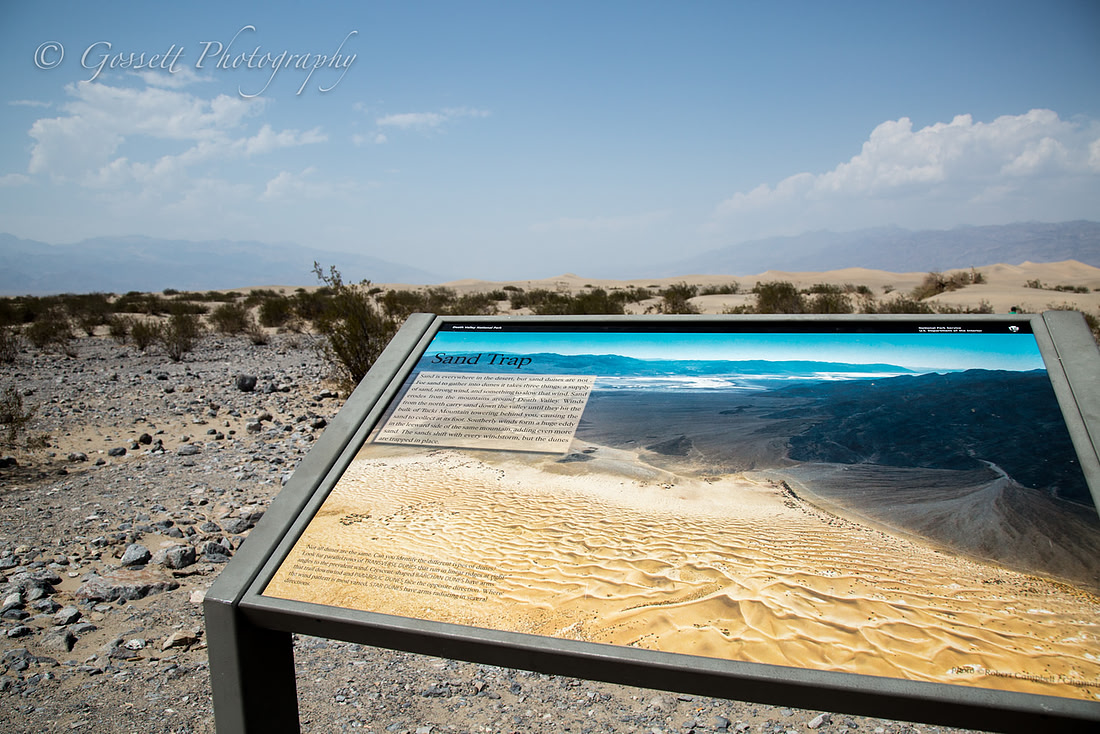
Stretching endlessly ahead, the Mesquite Flat Sand Dunes were both harsh and beautiful. We loved the patterns carved into the sand by the wind and the surprising bits of vegetation finding a way to grow in such an unforgiving landscape.
Finding Beauty in the Unexpected
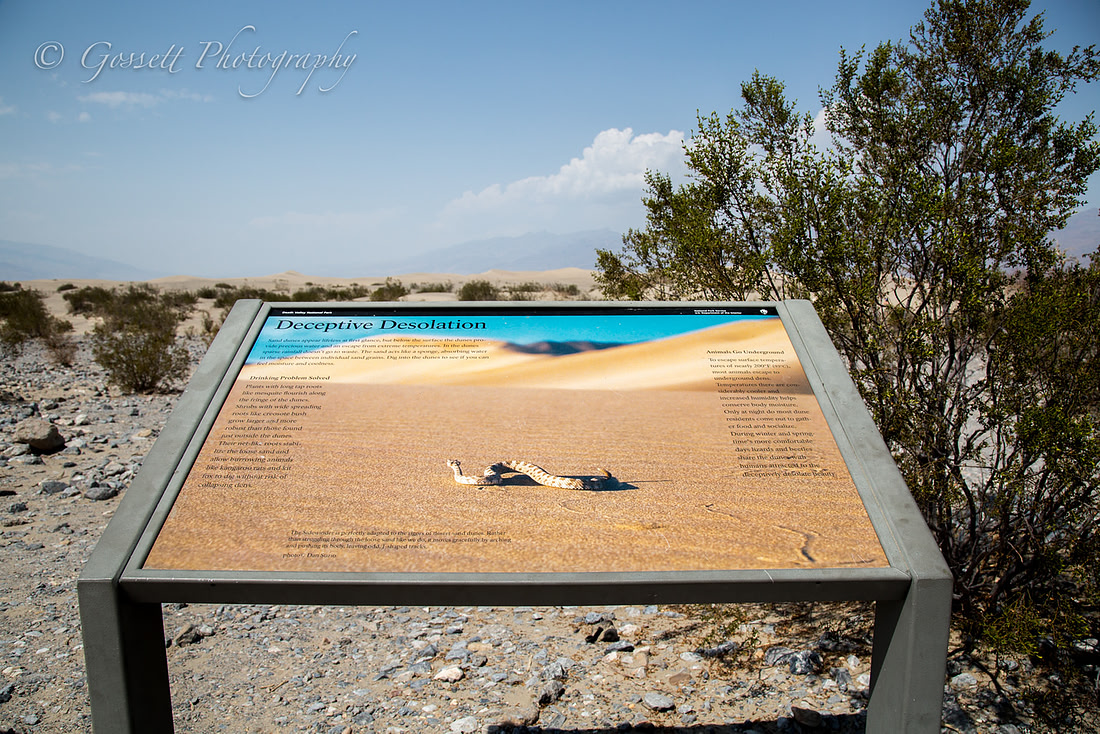
More informative signs greeted us, along with surprisingly large crowds of visitors—even in the middle of summer. After Mono Lake and the Ancient Bristlecone Pines, Death Valley was our third intentionally chosen stop in a landscape that felt anything but inviting.
As we continued exploring, we began to see the beauty in its differences. Death Valley was a lesson in looking a little closer—to find wonder in places that challenge our expectations and to appreciate the resilience of a landscape that survives and thrives against all odds.
Zabriskie Point: A Desert Shaped by Water
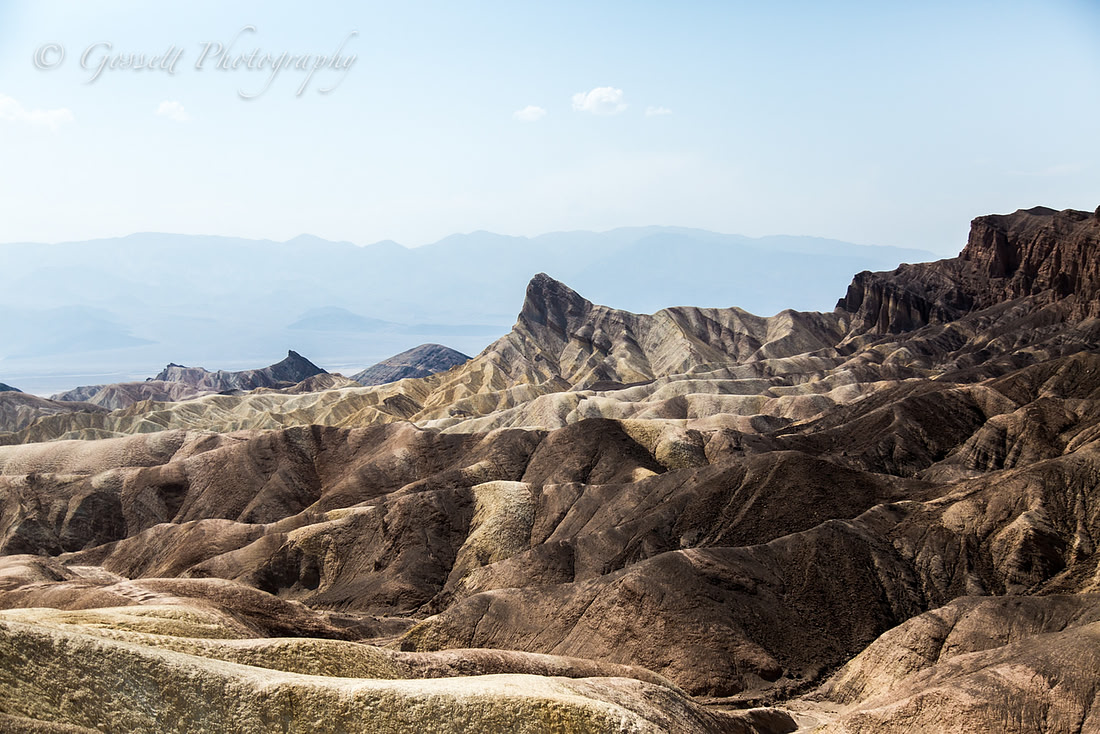
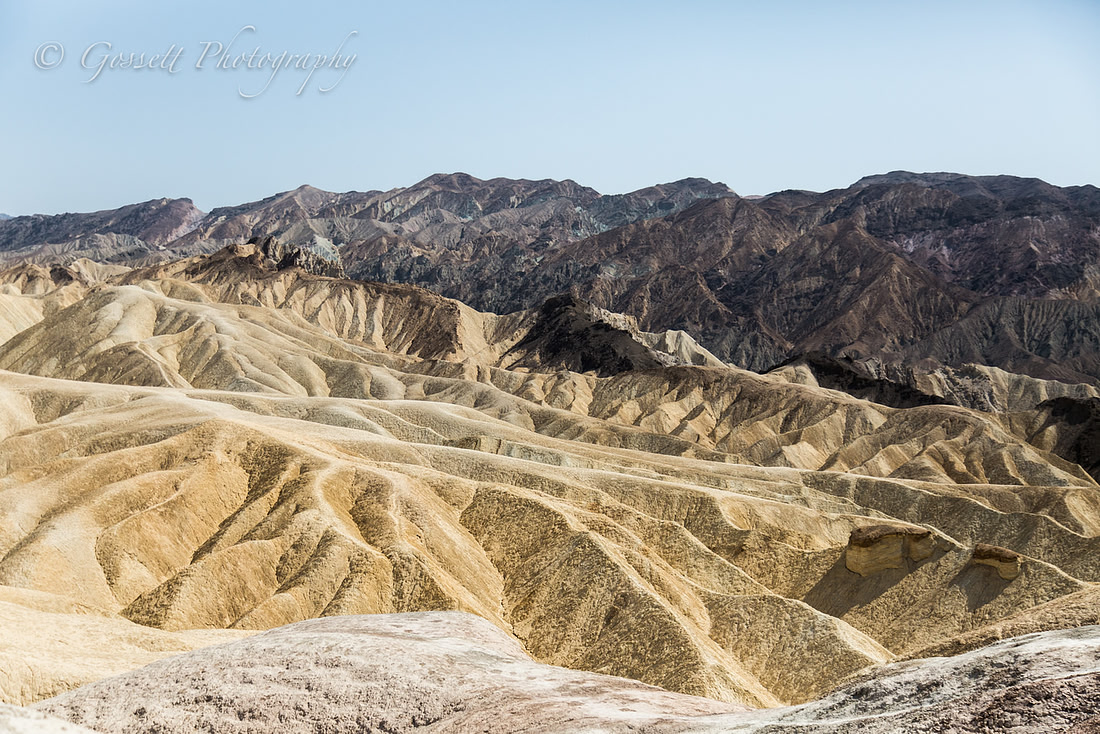
Continuing along Highway 190, we eventually reached Zabriskie Point, where golden badlands rise into unexpected formations across the desert landscape. Known for its incredible sunrise and sunset views, it was a stop we were excited to experience.
The short walk to the overlook felt much longer in the intense heat, but the view was worth it. Signs along the path explained how water played a major role in shaping and eroding this landscape—a fascinating contrast in a place that now feels impossibly dry.
For those wanting a closer look at Death Valley’s unique terrain, hikes like Gower Gulch offer a deeper adventure. It wasn’t an option for us on such a hot day, but it remains on my list for a future visit.
The Lowest Point: Badwater Basin
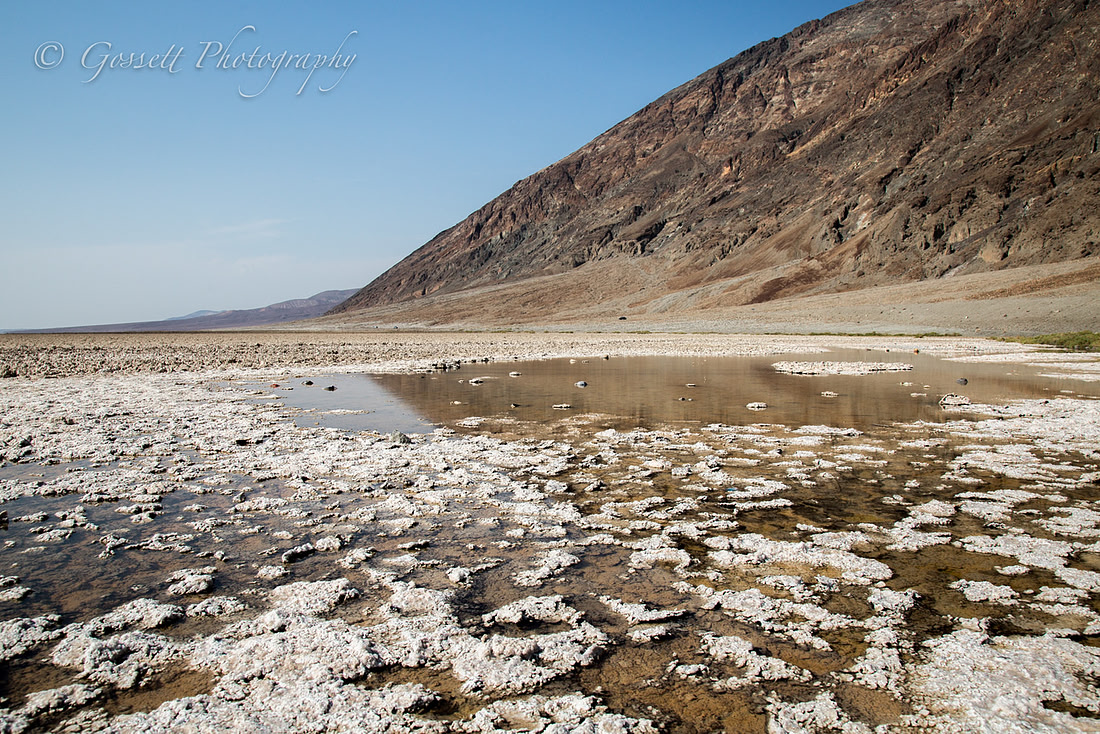
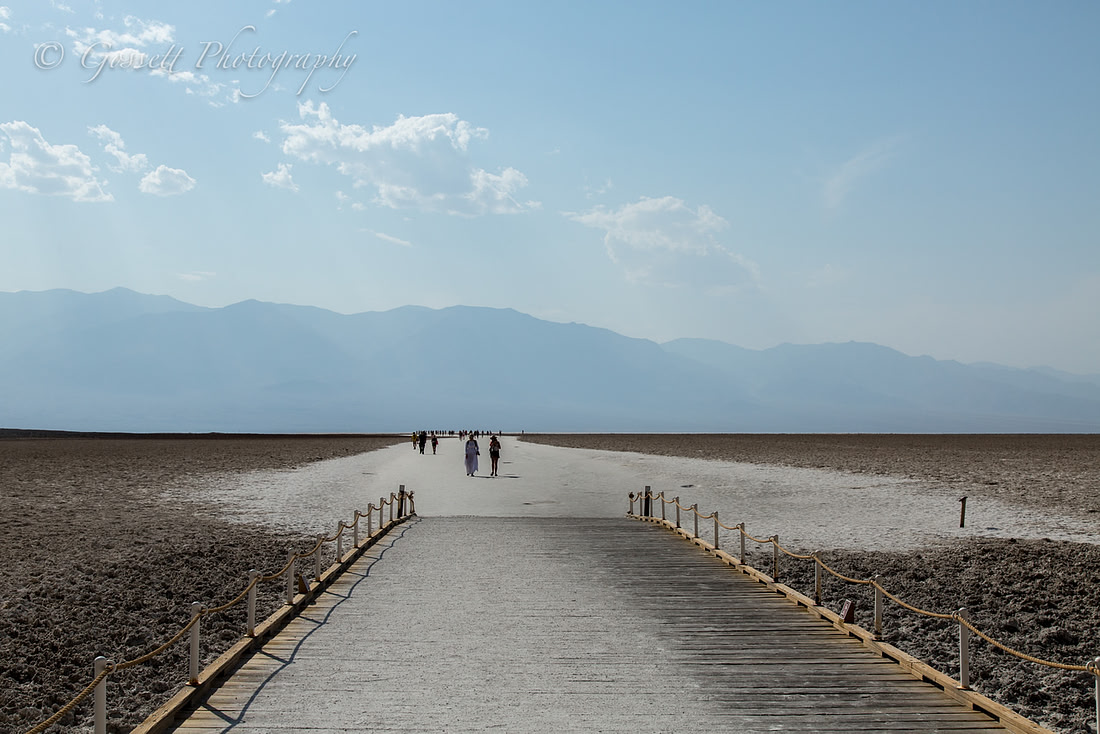
Our final stop in Death Valley was Badwater Basin, home to the lowest point in North America. We stepped out of the air conditioning and slowly made our way toward the salt flats, taking in the surreal landscape around us.
A small pool of water near the entrance felt almost out of place in such an incredibly dry environment, but it was a reminder of the contrasts that make Death Valley so fascinating.
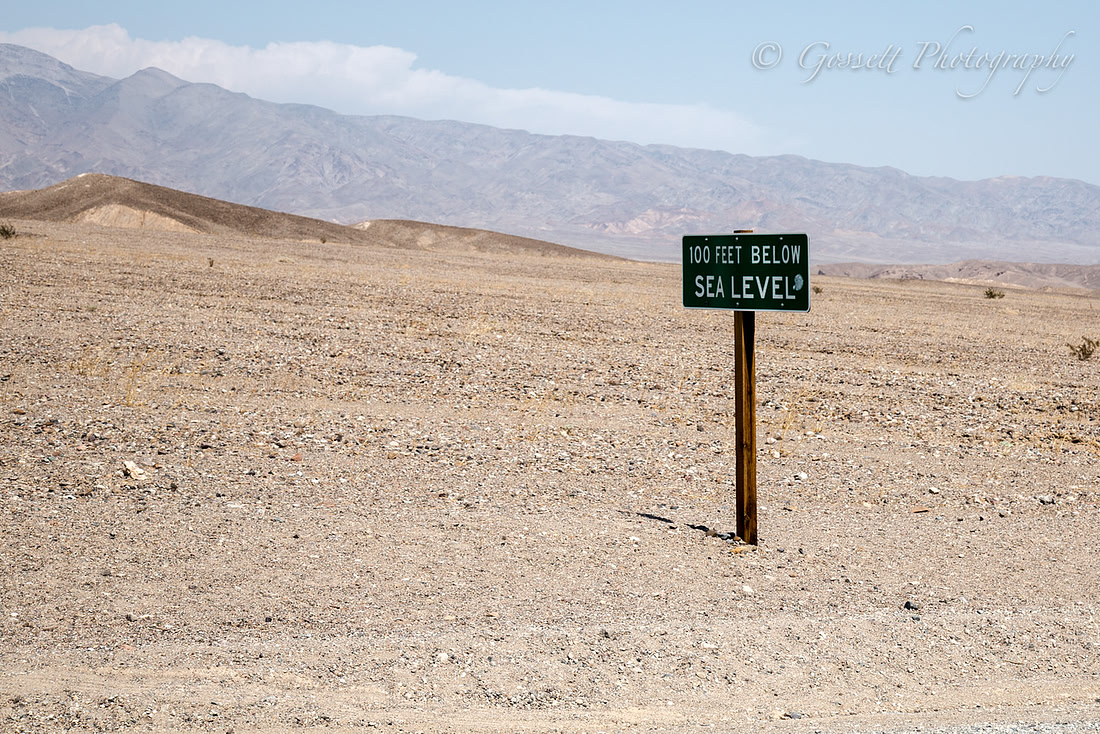
The heat made the walk feel endless, but reaching the salt flats was worth it. Looking back toward the mountains, we spotted the “Sea Level” sign high above us and realized just how far below it we were standing.
This road trip had become a journey of extremes—saltiest, oldest, hottest, largest, and lowest. Death Valley was unlike anything we expected, and that’s exactly what made it unforgettable.
Final Thoughts & Death Valley Tips
Despite the heat and its unconventional beauty, Death Valley left a lasting impression on me. I left inspired to return someday, but definitely during cooler temperatures!
If you’re planning your own adventure through this incredible national park, here are a few things I learned along the way:
1. Prepare for a lot of driving.
There is limited cell service and no reliable radio signal, so download playlists ahead of time, bring some car games, and make sure you’re traveling with people you enjoy.
2. Dress for the desert.
Comfortable shoes are a must. Sand has a way of finding its way everywhere, so sturdy shoes (and even higher socks) will make your day much more enjoyable. A wide-brimmed hat, sunglasses, and plenty of sunscreen are also essential.
3. Bring plenty of water, snacks, and a cooler.
The sights are spread out, and stops are limited. Having cold drinks and food with you will make the long drives between destinations much more enjoyable.
4. Protect your gear.
Photographers, take note—the sand gets everywhere. Keep unused lenses and equipment covered, and consider a protective camera cover for desert conditions.
5. Have a map and check your vehicle.
Don’t rely on cell service to navigate. Pick up a map at a visitor center, and make sure your vehicle is ready before heading into such a remote area.
6. Give yourself more time than we did.
We were traveling on a schedule, but a photographer or any outdoor enthusiast could easily spend a week exploring Death Valley. The sunrise, sunset, and night skies are said to be incredible, and I would love to return with more time to capture them.
My next visit will definitely be during a cooler season when the skies are dramatic, the temperatures are kinder, and there is more time to explore the trails and hidden corners of this remarkable place.
Death Valley taught me that beauty doesn’t always look the way we expect. Sometimes the most unforgettable landscapes are the ones that challenge us to slow down, look closer, and appreciate what makes them different.
Have you visited Death Valley National Park? I’d love to hear what you thought—or what you’d most like to see if it’s still on your list.